

Whole Genome Sequencing

Learn more
Using Whole Genome Sequencing (WGS), the complete genomic context of an organism (either DNA or RNA bearing) can be established.
WGS has been transformative in diagnostics for the identification of inherited disorders, but also for the identification of genetic traits in plants/livestock/bacteria in research or commercial applications.


Specifications & applications
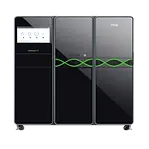


Flow cell types
v3 (SM1.0)
v5 (SM2.0)
R10.4
R9.4.1 (discontinued)
Standard v2
Standard v3
Nano v2
Micro v2
Max. read length
v3 (SM1.0) : 150 bp
v5 (SM2.0) : 150 bp
> 4 Mb
Standard v2 : 250 bp
Standard v3 : 300 bp
Nano v2 : 250 bp
Micro v2 : 150 bp
Max. run time
v3 (SM1.0) : 24-30h
v5 (SM2.0) : 24-30h
72h (interruptible at all time)
Standard v2 : 39h
Standard v3 : 56h
Nano v2 : 28h
Micro v2 : 19h
Max. capacity (bases)
v3 (SM1.0) : 1500 Gb
v5 (SM2.0) : 1500 Gb
< 50 Gb
Standard v2 : 8,5 Gb
Standard v3 : 15 Gb
Nano v2 : 0,5 Gb
Micro v2 : 1,2 Gb
Max. capacity (reads)*
v3 (SM1.0) : 5,8B SE - 11,6 PE
v5 (SM2.0) : 5,8B SE - 11,6 PE
< 5M (for avg. 10K bp reads)
Standard v2 : 15M SE - 30M PE
Standard v3 : 25M SE - 50M PE
Nano v2 : 1M SE - 2M PE
Micro v2 : 4M SE - 8M PE


Sample types

Blood > DNA
EDTA tube
10 ml (min. 3 ml)
Room temperature

Blood > cfDNA/ctDNA
Streck Cell-Free DNA BCT
9 ml
Room temperature

Cells of various tissue origins > DNA
Microtube* with cell pellet or on lysis buffer
> 5 million cells
Dry ice

DNA from various tissues > DNA
Microtube* or 96 well plate
See test details/specifications
Room temperature

Blood > DNA
DBS / Guthrie card / Punch in microtube*
Min. 1 punch
Room temperature

FFPE block of various tissues > DNA
Paraffin block (in cassette)
Representative block ; Tumor load preferentially >10% ; To be processed by our pathology department (microtome section needed)
Room temperature

FFPE section of various tissues > DNA
Microtube*
Min. 1x 10 µm section (up to 2 mm³ tissue) ; Tumor load preferentially >10%
Room temperature

Plasma > cfDNA/ctDNA
DNA LoBind 5 ml tube
> 2ml
Dry ice

Tissue of various origins > DNA
Cryovial containing stabilizer (eg. AllProtect) or tissue homogenized on lysis buffer
Application/tissue specific (contact us)
Dry ice
Extra requirements
See test/application specific recommendations
:
More information can be found on the subpages (related tests)
Deliverables
Below, you can find the type of data files that can be retrieved for this test.
If you require more information or need a more custom output, please consult our Bioinformatics page.
Raw data - fast5 file
Raw data file generated by Oxford NanoPore sequencers
RUO (on request)

Annotated variant file
Text file containing all detected variants + relevant annotation (cross reference to various databases)
Diagnostic / RUO
Called variants - vcf file
Text file containing all detected variants as compared to the relevant reference genome
Diagnostic / RUO
Raw data - bam file
Binary data file containing the aligned reads
RUO (on request)
Raw data - fastq file
Data file containing the raw (unaligned) reads
RUO (on request)


Documents & certificates

141-TEST (BRIGHTcore)


Plan experiment
For Diagnostics
This test is mainly performed as a diagnostic assay. In this case, please contact your General Practitioner or Clinical Geneticist (Centre for Medical Genetics of choice) to get the diagnosis started.
For Research
This test can also be applied in context of research. For this, please get approval from your local ethical committee and/or make proper arrangements with your Biobank.
Please follow the steps below to start up an experiment with us.
Get in touch (ONLY FOR NEW PROJECTS)
Explain your project, so we can assist you to find the best solution.
Expect questions like :
What type of sample would you like to analyze?
Which elution buffer did you use?
What are the expected concentrations of your samples?
How many samples would you like to process?
How fast do you need the results (TAT) and/or do we need to expedite?
If you deviate from our sample types, are there test samples available?
Are our standard deliverables ok?
...

1
Request quotation
Once you know which experiment you want to set up, fill out the 'Quote request' form, with the essential details of your project :
Coordinates of the person to whom to address the quotation
Which type of test you'd like to set up
Do you require a specific deliverable?
Do we need to expedite (comes at extra cost)?
...

2
Submit your samples
Once you agree with our terms (quote / TAT / terms & conditions) :
Fill out our sample submission form
Send it via email : contact us
Print out the form and include it with your samples
Send your samples to us
Label your tubes/plates correctly : see details here
Adhere to the corresponding transport conditions listed under Sample types
Indicate if we can discard your samples after completion of project

3
Your experiment starts
Now it is up to us... We will start your experiment as soon as possible.
When expedited, the turn-around-time (TAT) is 1 month
For standard requests the turn-around-time (TAT) is 2 months
The standard TAT is generally overestimated, but this extended timeframe allows us to : combine similar requests of multiple scientists and to repeat the experiment in case of issues.
Please refrain from contacting us in case the pre-agreed TAT didn't expire yet.


